
Kaleidotrope, January 2026
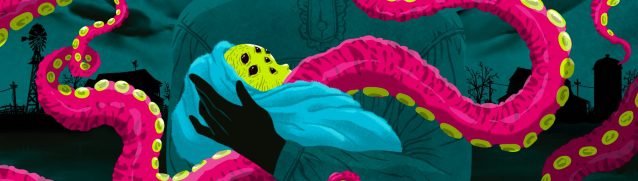
An ornithologist receives an urgent call from Pearson, a worker at the Heinlein Space Center, claiming to have spotted a nesting pair of northern pipers—a species believed extinct for years. Despite the late hour and his son Jack’s impending homecoming, the narrator immediately agrees to travel west to investigate after seeing photographic proof.
The journey requires a hyperloop ride to Portsville followed by a long bike ride through increasingly desertified marshland. The narrator reflects on how most people who planned to leave Earth have already departed for colony worlds, where northern pipers have been successfully re-engineered from tissue samples. When he arrives, Pearson shows him the nest’s shocking location: wedged into a groove in the exhaust trench beneath the launch tower, where it will be incinerated when the next shuttle launches in two weeks.
The narrator confirms the sighting through binoculars—a female northern piper with distinctive white eye bands. His calculations are grim: the eggs likely haven’t hatched yet, and the chicks won’t be able to fly to safety before the scheduled launch. When he asks to retrieve the nest himself or have maintenance workers do it, Pearson explains it’s impossible—too dangerous for civilians and not worth the resources for “just a bird.”
Arriving home late that evening, the narrator finds Jack has arrived early. Now twenty-five, taller and bearded, Jack has spent five years working with the Red Cross in crisis zones worldwide. Over dinner featuring an extravagant chicken (purchased by his mother to celebrate), Jack shares stories of his humanitarian work. The narrator mentions the doomed pipers, inadvertently noting how parent birds sometimes sacrifice themselves trying to protect their young—a comment that creates uncomfortable silence.
The tension recalls their last meeting two years ago, when the narrator had purchased one-way tickets to a Sirius colony for the family. Jack had refused, furious they’d planned without consulting him, insisting people on Earth needed help more than potential colonists. Though his parents couldn’t leave without him, Jack had departed anyway for another assignment, and the shuttle left without them.
The next morning, Jack is gone again, leaving only an unopened note. The narrator’s attempts to halt the launch or save the nest fail—the department lacks resources, and endangered species are lost daily. Pearson sends video showing both parent pipers taking shifts at the nest, reminding the narrator of when he and his wife worked opposite schedules when Jack was small.
On launch day, the narrator lies to his wife about attending a conference and bikes back to the spaceport. Stopped at the checkpoint, he watches from a distance as the shuttle prepares to launch. He reflects that he should have forced Jack to leave Earth, but knows it’s too late—Jack’s resolve only strengthens with each crisis he witnesses. As the rocket boosters ignite, the narrator desperately hopes the pipers will fly to safety, while knowing they cannot abandon their young. The story ends as the engines fire.

Dan Peacock is a sci-fi and fantasy writer from the UK. His stories have been published in F&SF, Cast of Wonders, and Metastellar, among others. You can find his work at danpeacockwriter.com. He lives with his long-suffering partner and daughter, along with a second-hand cat that doesn’t work properly.