
Lightspeed, April 2026

Dr. Jason Holloway — psychiatrist, three-time divorcee, recovering alcoholic, and self-diagnosed schizophrenic — arrives in Los Angeles to take on the role of Clinical Director at Margins Treatment Center, a partial hospitalization program in Beverly Hills. He narrates his own story with wry self-awareness, parsing his unraveling through the language of DSM diagnostic labels, each section heading a different disorder that doubles as a chapter title and a winking commentary on his mental state.
Holloway has coined his own condition: empathetic schizophrenia, a form of psychosis in which he absorbs and mirrors the psychiatric symptoms of his patients. On his medication regimen, this gift is manageable — even therapeutically useful. Off it, the boundary between clinical empathy and full-blown psychosis dissolves. The story opens with Holloway already slipping: his custom medication dispenser has been jammed for a month, and his antipsychotic — the most critical component of his regimen — has gone undispensed. He doesn’t immediately notice. The insidious onset of his decompensation is precisely the point.
Drawn to a grief-stricken patient named Marcus Walters — a thirty-five-year-old man who attempted suicide by hanging after losing his wife in a car crash — Holloway begins conducting unauthorized individual therapy sessions, defying the explicit directive of Margins’ CEO, Dr. Kirsten Lynch. He also takes on a string of patients with exotic psychotic disorders: Cotard’s delusion, Capgras syndrome, parasitosis, narcolepsy. In each case, he deliberately reduces his medication to “lean into” his condition, convinced that absorbing his patients’ symptoms gives him a therapeutic edge unavailable to saner clinicians. The story is darkly funny about this self-mythology, even as the evidence of his deterioration accumulates.
Threading through the clinical chaos is Evelyn, a therapist at Margins whom Holloway recognizes as his former therapist from years earlier — a coincidence that unsettles them both. She serves as his informal anchor, grounding him when his psychosis begins to tip. Holloway also manages a halting romantic life, bungling dates with characteristic self-destruction before landing something more genuine with a woman named Caroline.
The narrative’s hinge arrives when Holloway discovers that Annabelle Brown — a patient he’d grown invested in, a sex addict whose sharp insights he’d even piggybacked on in group therapy — never existed. She was a full hallucination: auditory, visual, and apparently gustatory. The revelation shakes him. His rival, Dr. Julius Turner, has been quietly documenting these irregularities and building a case against him with Dr. Lynch — including the far more devastating truth that Evelyn Walters, Holloway’s supposedly real colleague, shares the name of Marcus’s dead wife, and may herself be a hallucination.
Marcus is discharged. Shortly after, he dies by suicide. His note makes no mention of Holloway. The loss guts the story’s ironic tone without abandoning it entirely.
The ending is deeply ambiguous and structurally elegant. Dr. Lynch fires Turner rather than Holloway — apparently because Holloway is too good for business to lose — and then, alone in her office with a bottle of liquor, begins quietly cleaning up his notes. The story closes on the question it has been asking all along: how much delusion can an institution accommodate when it serves the bottom line, and how much insight does a brilliant, broken doctor actually have into the damage he leaves behind?
Key, himself a practicing psychiatrist, renders the clinical texture of the story with authority, but his real accomplishment is using Holloway’s disorder as a structural and thematic engine — a way of exploring the porousness between healer and patient, between empathy and projection, between genuine therapeutic connection and self-serving grandiosity.
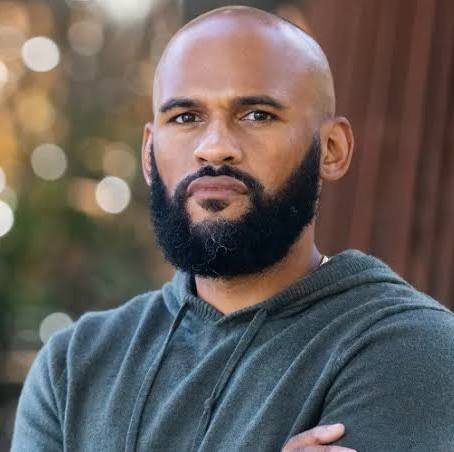
Justin C. Key is a practicing psychiatrist and a speculative fiction writer. A graduate of Clarion West 2015, he is the author of the story collection The World Wasn’t Ready for You, and his stories have appeared in the Magazine of Fantasy & Science Fiction, Strange Horizons, Escape Pod, Lightspeed, and on Reactor. His debut sci-fi novel, The Hospital at the End of the World, is out now from HarperCollins. He received a BA in biology from Stanford University and completed his residency in psychiatry at UCLA. He lives in Los Angeles with his wife and three children.