
Asimov’s, July/August 2026
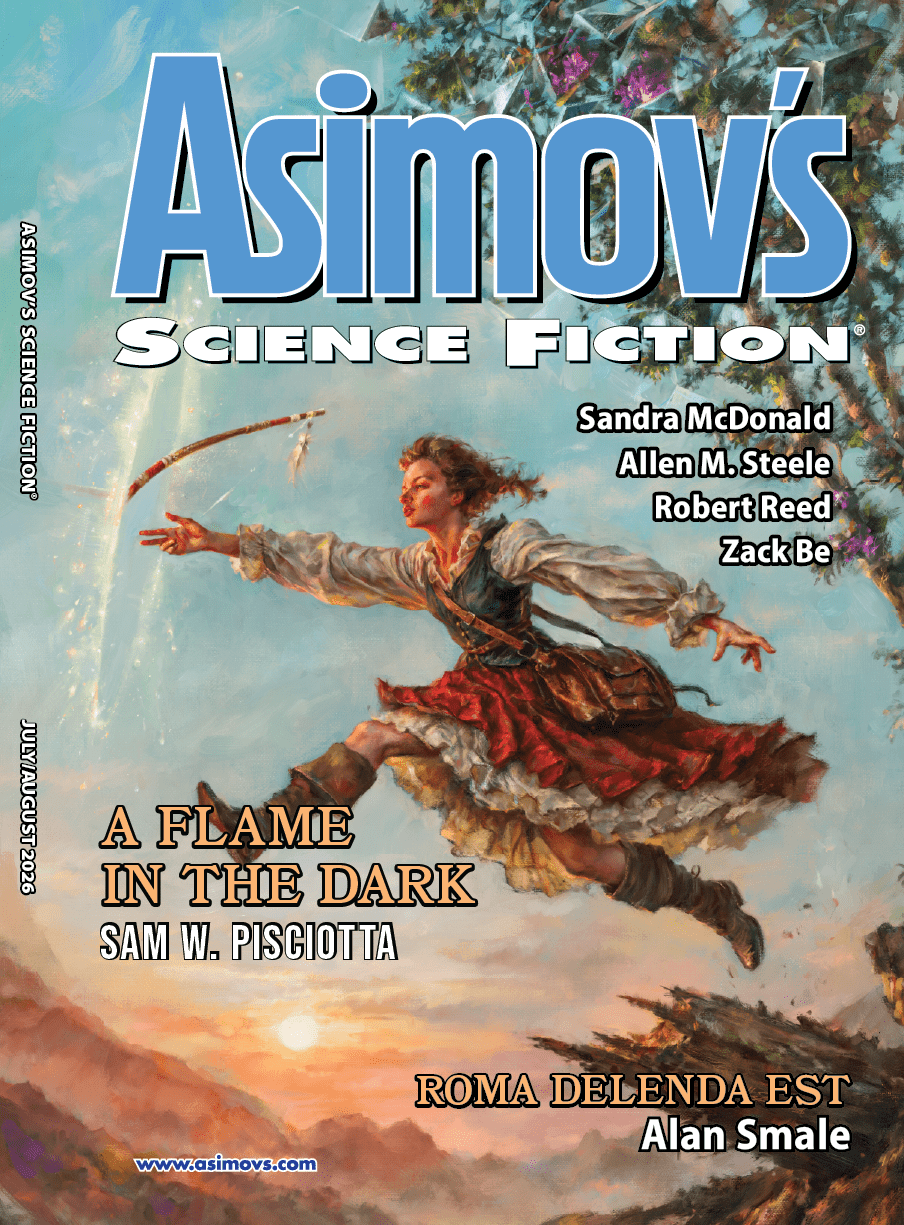
A bus full of kidnapped schoolgirls nose-dives into a reservoir in rural Senegal, and the three gunmen at the front find themselves trapped in rising water while their leader, Abdul-Jaami, screams threats even as he drowns. Niang Fatou Diop, the adult chaperone, rallies the girls to escape through the back door and refuses to help their captors as the water climbs toward their necks.
Six months earlier, that same reservoir was empty dust. Niang, a Dakar-born, Montreal-and-America-raised engineer, has returned to Senegal as Geoscaping Lead for LagoMorph, a company competing for the half-billion-euro IBEX Prize to accelerate construction of the Great Green Wall. On a work site near Linguère, she meets a new reinforcement worker, quiet and wary, and patiently explains the project to him: stone bunds, detention and retention ponds, carved brooks, all designed to slow floodwater, rebuild soil, and let the Sahara’s ancient rainforest return. She later shows him the tented hydroponic farms and shipping-container mini-farms that feed the operation, and he responds with a mix of awe and unsettling phrasing, calling the climate-controlled growing spaces a “prison” that keeps food safe. He gives his name only as Abdul-Jaami.
Back in the present, Niang and the girls push the flooded bus over the pond’s edge, and Abdul-Jaami surfaces, dragging his fellow gunmen, Blaise and Seko, from the water. Unarmed and out of options, the men are captured. Project Director Martin Kouyate arrives with reinforcements, confirms no one is hurt, and takes charge of the crisis. Dr. Nzengho Zang, LagoMorph’s brilliant, abrasive Gabonese lead botanist and mycologist, proposes handling the captured kidnappers himself rather than calling the police, who could never arrive in time to matter. He reveals a canister of iboga, a psychoactive root bark central to Bwiti spiritual practice, and insists it isn’t poison but a sacrament capable of forcing the men to confront themselves. Over objections about its danger and legality, Kouyate authorizes him to proceed.
Under the drug’s influence, Abdul-Jaami relives the collapse of his family’s water-starved land, his failed attempt to migrate to Europe, the horrors of trafficking and a Libyan detention camp, and his eventual recruitment by the Shekauist militants who gave him purpose through violence, including forcing him to help behead a prisoner. By sunrise, broken and lucid, he tells Niang he now understands the difference between what was done to him and what he chose to do to others, and between the exploitation he escaped and the community-building work Niang’s team represents.
Zang departs in a blaze of contempt, having accomplished what he calls reassembling “the Assembler of Scattered Creations,” Abdul-Jaami’s own name translating to a divine attribute. Left processing the night’s violence and its strange redemption, Niang and Kouyate debate what Zang’s abilities could mean on a global scale, reflecting on history’s habit of banning the very substances that might heal it. Steadied by each other, they head back to breakfast and the ongoing work of greening the desert.
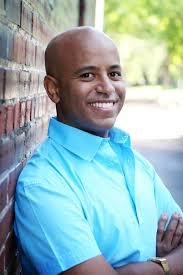
Minister Faust is best known for his cult-classic novel and Philip K. Dick Award-finalist and Locus Best First Novel-finalist The Coyote Kings of the Space-Age Bachelor Pad, and his PKD-runner-up and Kindred-winner Shrinking the Heroes. His short fiction and journalism are published in a wide range of magazines and anthologies, and he offers online master classes in fiction writing called Write Like a MF (and I’m not kidding— MF stands for “Master of Fiction”) . Currently, he’s writing a series of interlocking eco-optimistic short stories for an eventual Martian Chronicles-style novel called Great Green Sahara