
In a domed underground city called New Chicago, built after the surface became uninhabitable, Brother Adalbert spends his final day as caretaker of a single ancient oak tree enshrined in the Hall of the Trees. For thirty years he has swept its leaves, tended its glass-enclosed soil, and drunk his coffee in thirty-minute breaks, quietly failing at the one task that matters: coaxing the tree to produce acorns that might grow into new life. As his last shift winds down, his mind drifts back through the story of how he came to this place.
He was once Adam, a twenty-four-year-old new hire in Accounting, who met a woman named Mary crying alone at her cubicle on his first day. Something in her unshed tears drew him to her, and after working up the nerve, he asked her to dinner. Their courtship is tender and clumsy: a nap on a park bench beneath artificial birdsong and a projected sky, a first date that ends badly when Mary reveals her father will soon die and Adam fumbles for the right words, and a painful stretch of avoidance before Mary returns to apologize first. They marry, have two sons, and Adam takes religious vows, becoming Brother Adalbert.
Central to the world is a societal ritual: on one’s thirtieth birthday, each person learns the exact lifespan they have been allotted, a number revealed like a countdown. Adam remembers his own reveal morning, distracted by his infant son’s soiled diaper, drawing fifty-five years. Months later Mary draws forty-seven, meaning she will die before him. These predetermined endings hang over every relationship in the story, shaping how people love, grieve, and prepare for loss long before it arrives.
Now, decades later, widowed and reaching the end of his own assigned span as his final shift closes, Adalbert lies back on a bench to look up at the tree’s canopy one last time. Just as he resigns himself to having failed the tree exactly as the watchers before him did, he notices small objects falling and striking the glass around the enclosure. They are acorns, an occurrence he can barely let himself believe or name. Something in him resists articulating it, as though speaking the word might undo the miracle.
Abandoning irritation at the timing, Adalbert gathers the acorns and hurries to bury them in the cracked, glass-covered patches of soil scattered throughout the hall, remnants of a forest that once stood before catastrophe turned the ground to glass and forced the city underground. With his remaining minutes, he pauses to thank the unnamed hands that built the dome and cracked open the glass to reach fertile earth beneath. He fills his pockets and moves from circle to circle, planting as many acorns as he can before his time runs out, ending his last shift not in failure but in a small, urgent act of hope for a future he will never see.
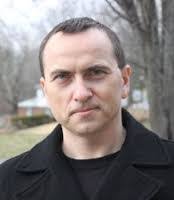
Karol Lagodzki , a native of Poland, is an exophonic, English-language author of fiction. His stories have appeared in Invisible City, Storm Cellar, NUNUM, Streetlight Magazine, and elsewhere, and he has won Panel Magazine’s Ruritania Prize for Short Fiction. His first full-length book, Controlled Conversations, a story of perseverance under an authoritarian regime, was a finalist for the 2025 PEN/Hemingway Award for Debut Novel. Karol lives halfway down a Southern Indiana ravine with his wonderful family, a scurry of squirrels, a passel of possums, a gaze of raccoons, a descent of woodpeckers, and a large dog.