
Uncanny, March/April 2026

A woman and her husband discover a two-foot circular hole in their bathroom wall, emanating cold wind that smells of wet soil and river water. Their argument about what to do with it reveals the quiet, accumulated distance between them: she wants to confront it, cataloguing it as yet another entry in her long history of bad luck; he wants to sleep it off, trusting that the morning will resolve what the night makes frightening. They cannot agree, as they have not truly agreed on much in years.
The story moves fluidly between present crisis and layered memory, using the hole as a portal — literal and figurative — into the geography of a marriage. The husband, drawn to the bathroom alone later that evening, steps through the hole and finds himself in a colorless otherworld: a raised boardwalk beside a fast, dark river, towering sequoias cloaked in rot, and a distant stone gate he has never dared approach. He has been here before, many times. Time and distance in this place are not external measurements but bodily sensations — a ticking in the chest, a hollow between the bones.
The wife’s interiority is built through memory: her father’s years of silent unemployment, when she followed him to a park bench and glimpsed, for the first and only time, who he really was beneath his business suit and failure. Her childhood in Japan, her displacement in America, the practiced lies she tells their friends about how she and her husband met, the way she studies her own reflection as though searching for evidence of a self she can no longer locate. On their wedding night, she asks him if he has ever felt like he is staring out of a stranger’s eyes — strangling the real self, unable to find the way back in. He does not quite know how to hold the weight of her confession.
In the othersworld, the husband sees a figure standing beneath the stone gate and gives chase through the infinite sequoia path, running until his body aches and the figure dwindles to a point on the gray horizon. Distance, the story tells us, is a feeling you cannot measure until the end. The husband’s journeys through the hole are framed as escapes he has been making for years, the otherworld a place where time passes without demand, where nothing requires him to speak or act or translate himself.
The story’s climax comes in a painful bifurcation: in one timeline, the husband returns from the bathtub, holds his wife, tells her the hole is real, and promises he will always find his way back. They grow old together. In the timeline that actually unfolds, he cannot reach her across the accumulated river of small failures, unspoken words, and misunderstandings. The hole pulses behind him. In the otherworld, a voice with a familiar warmth — someone he once loved — rests a hand on his shoulder and tells him he does not need to return. He has, at last, forgotten whom he once promised to come home to.
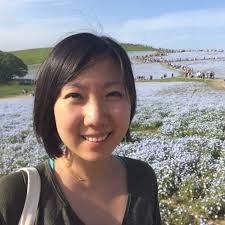
Angela Liu is a Chinese-American writer/poet based in NYC and Tokyo. She is a two-time Nebula Award and 2025 Astounding Award Finalist. Her work has also been nominated for the Hugo, Locus, Ignyte, and Rhysling Awards. She previously researched mixed reality at Keio University in Japan with a focus on new narrative platforms and tangible interfaces for remote communication. Her stories and poems are published/forthcoming in Clarkesworld, Strange Horizons, Lightspeed, and Logic(s), among others. Check out more of her work at liu-angela.com or find her on Twitter/Instagram @liu_angela and on Bluesky @angelaliu.bsky.social.