
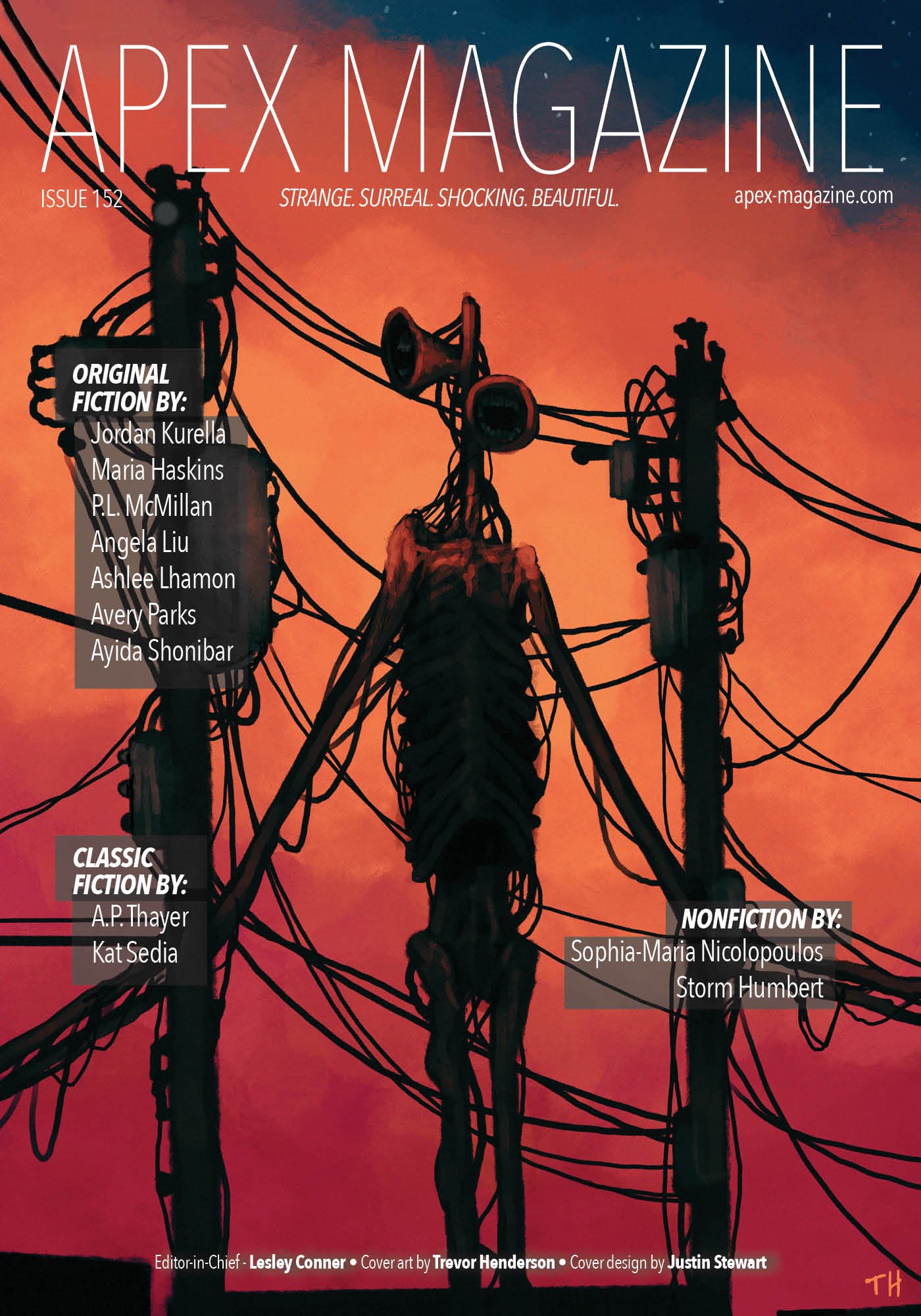
Apex, February 2026
Sam is a competitive climber who lost their left arm in a factory accident — distracted by a voice note from their partner Abithe while initiating a dangerous tine mill process. The loss ended Sam’s athletic career; climbing federation rules disqualified anyone with a non-approved prosthetic arm, and the affordable mecharms available through the Company network weren’t sanctioned for competition. Consumed by grief and resentment, Sam becomes fixated on the Tower: a vast, obsidian monolith of alien origin that a shadowy corporation has opened to climbers willing to risk their lives for a ten-million-credit prize. Abithe pleads with Sam to let it go, to choose a life with her over an obsession that is destroying them both. Sam leaves anyway, promising — through a final voicemail at the Tower’s threshold — that this will be the last climb, and that afterward everything will be different.
The story unfolds in non-linear fragments, alternating between flashbacks to Sam and Abithe’s deteriorating relationship and present-tense sequences from the climb itself. Inside the Tower, all sound is swallowed and distorted, all technology degraded. The walls are made of iridescent obsidian that plays tricks with light. Other climbers have fallen, starved, or been attacked. Sam presses upward through physical agony — an inflamed elbow, cramping fingers — past a crying climber begging for help, past a disemboweled corpse whose food Sam eventually, desperately consumes. Haunting creature-things with calico skin and too many joints cling to the walls, babbling. Sam ignores or avoids them until, near the seven-thousand-meter mark, one attacks in the night, destroying Sam’s mecharm and leaving Sam apparently stranded with no means of ascending or retreating.
The story’s pivotal horror arrives when Sam discovers that the creature’s severed arm carries parasitic, worm-like tendrils capable of bonding with living flesh. In a scene of visceral, agonizing body horror, Sam surgically removes the remnants of the mecharm and grafts the creature’s limb onto their own shoulder. The appendages fuse the alien flesh to Sam’s body. Sam wakes with a functional new arm: six fingers, double joints, talons, and suction-tipped pads that adhere to the Tower’s stone — perfectly adapted for ascent. The transformation is framed with a kind of ecstatic, horrible relief.
By the story’s final section, Sam has climbed past twenty-three thousand meters, hunting the Tower’s creatures for food, moving with inhuman ease. The interiority has shifted entirely. The voice that once ached for Abithe’s forgiveness now fantasizes about forcing her to kneel and beg, about punishing the Company, about breaching a god’s paradise and seizing what is owed. The tender, desperate love that motivated the climb has curdled into something predatory and megalomaniacal. Sam’s last voicemail — left at the Tower’s entrance, full of sincerity and longing — closes the story as a kind of epitaph for the person who entered. What continues ascending is no longer quite Sam.
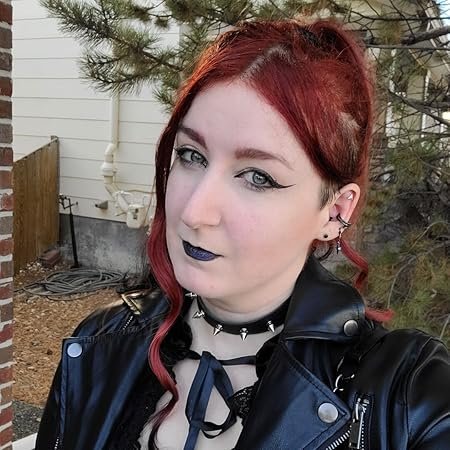
P.L. McMillan is a Canadian expat living in the States, after having taught English for three years in Asia. With a passion for cosmic horror and sci-fi horror, P.L. McMillan sees every shadow as an entryway to a deeper look into the black heart of the world, meant to be discovered and explored. Infatuated with the works of Shirley Jackson, H.P. Lovecraft, and Ridley Scott, her dream is to create stories of adventure, of chills, of heartbreak, and thrills.
P.L. McMillan’s short fiction has appeared in a variety of anthologies and magazines such as Apex Magazine, Cosmic Horror Monthly, Strange Lands Short Stories, and AHH! That’s What I Call Horror, as well as adapted to audio forms for podcasts like NoSleep and Nocturnal Transmissions. In addition to her short stories, McMillan’s debut collection, What Remains When The Stars Burn Out, and debut novella, Sisters of the Crimson Vine, are available now.