
Kaleidotrope, April 2026
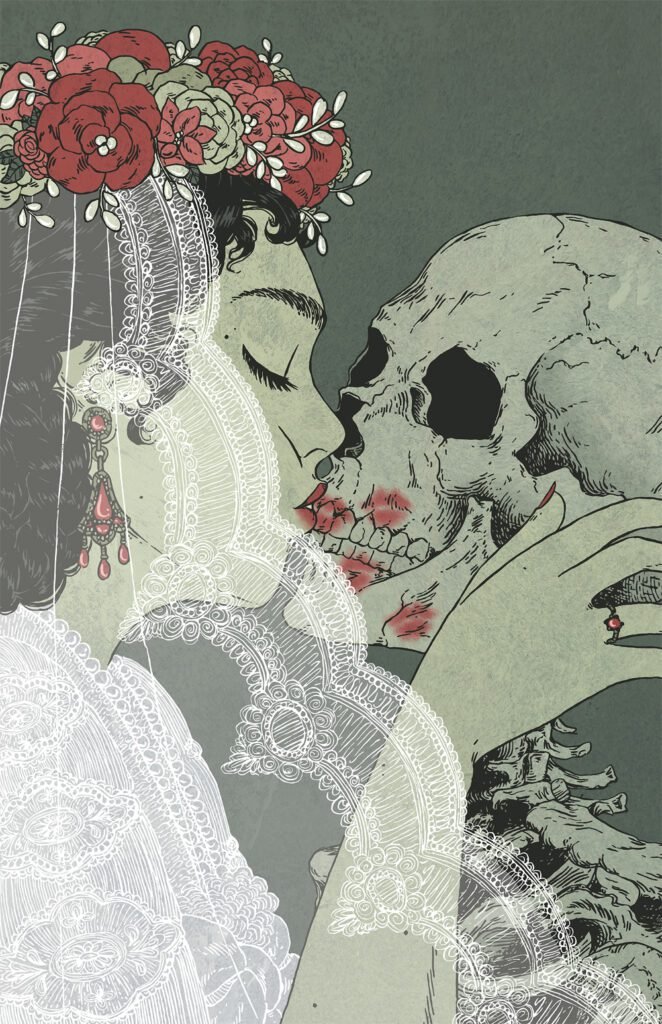
The story is told in second person, a technique that places the reader inside the fractured consciousness of an unnamed intelligence operative — someone who exists, as they put it, not in any box on an org chart, but in the spaces between. The narrative moves in two temporal registers that blur together as the story progresses: a debriefing session in a drab, surveilled room, and the recalled mission that preceded it.
In the present, the protagonist sits across from Cooper, a handler conducting what he calls a second interview. The room is stripped and cold, lace curtains filtering pale light. The operative has plastered strips of duct tape across the walls, the floor, the ceiling — covering cracks that only they can see. Cooper records everything on a theatrical tape deck, though the room is already lousy with hidden surveillance. He wants to know what happened on the mission: why Owens is dead, and why Geneva is still alive.
What happened, the operative explains in fragmentary flashback, began with a drive through an unnamed African landscape — dust, heat, a baobab tree, a startled gazelle. A mining operation has been running illegally for a decade in a protected zone, bribing officials and tunneling vast quantities of diamonds northward toward Moscow via a needle-thin smuggling route. Then something changed: the miners found something else entirely, something no dossier had prepared anyone for.
Deep in an open-cast pit — a wound in the earth so large the operative compares it to standing at the edge of a sea, or looking down on the night sky — the local handler Geneva leads the operative and their American muscle Owens into a natural-seeming cavity far below the surface. Inside: seven diamonds, each nearly seven feet tall, impossible by any physics of geology or pressure. Six of them contain shapes — hunched, man-like, perhaps eight or nine feet tall, with something that looks like folded wings. The seventh diamond is cracked open, its occupant already gone.
When Owens reads the folder of documents Geneva provides, he vomits. When he sees the diamonds in person, he weeps and laughs at once, arms outstretched, face radiant. He walks toward them with unmistakable reverence. The operative shoots him in the temple to stop him from making contact. The blood is absorbed through the diamond’s surface, flowing toward the outstretched hand of the shape inside, turning from red to black as it goes.
Geneva, revealed as partially transformed already — her skull replaced in part by diamond — smiles through a bullet that merely grazes her. The operative flees, discovers a second tunnel lined with shattered empty diamonds, and escapes in the Jeep. They drive until the fuel runs out, collapse on the roadside, and wake on a military plane.
Back in the present, the debriefing ends catastrophically. The tape deck cracks in two; Cooper shatters into a swarm of fractured reflections. The operative laughs — bullets won’t work now, not anymore. The cracks papered over with duct tape were never in the walls. They were inside the operative all along. A diamond has been whispering to them, transmitting knowledge meant only for beings of pure light. The operative is one of many messengers now, spreading the signal from interrogation rooms and conference halls to presidential offices and street corners. Cooper fires. It doesn’t matter.
The story closes on the operative weeping tears of joy that catch the light and shine like diamonds.
Stone deploys the spy thriller framework — tradecraft, handlers, double agents, Cold War geography — as scaffolding for something older and stranger: a cosmic horror story about encounter, contamination, and transformation. The second-person narration implicates the reader in the protagonist’s dissolution, and the duct tape becomes one of the story’s most efficient images — the futile human impulse to paper over what cannot be contained.
Grant Stone‘s fiction has appeared in Shimmer, Strange Horizons, Andromeda Spaceways Inflight Magazine and has twice won New Zealand’s Sir Julius Vogel Award.