
Asimov’s Science Fiction, March/April 2026
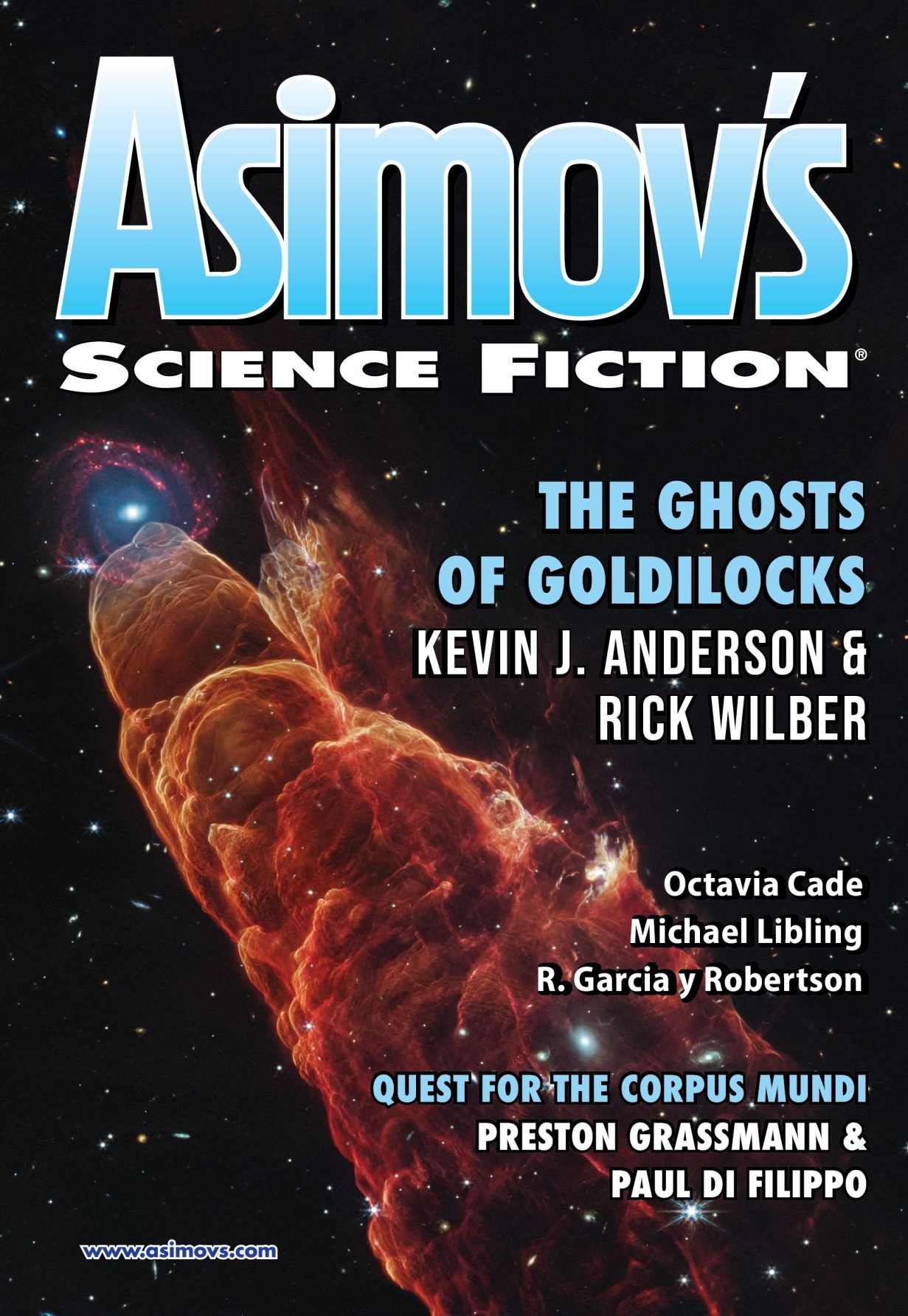
In a future where benevolent AIs once guided humanity to prosperity before mysteriously vanishing, investigator Galédin searches for missing asteroids that might explain their departure. The AIs had swept the inner solar system for resources, planning to nudge mineral-rich asteroids into Earth orbit. But when they left, they took all asteroid data with them—except the names of the “rock-hoppers” who prospected them.
Galédin’s search leads to an isolated Greek island monastery, a semi-autonomous ecclesiastical colony that requires visitors to declare their assigned sex at birth. Frustrated by this backward place seemingly untouched by the AI-driven progress that transformed Earth, Galédin must navigate a world of ancient stone shrines, bearded monks speaking halting universal language, and religious traditions dating back a millennium.
The island has no network connection and no central directory. To find the rock-hopper Mandrite Tómas, Galédin must physically hike from monastery to monastery across steep hills. After days of fruitless searching and enduring hours-long prayer services in archaic languages, Galédin finally reaches the Grand Lavra and learns Tómas lives in “the desert”—the island’s southern tip where hermit monks live in caves carved into cliffsides.
Guided to a perilous cliff path, Galédin climbs a rope ladder to Tómas’s cave cell. The former prospector, now a monk with grey hair and beard, confirms visiting asteroid 01919998. Tómas confesses to filing a false report, claiming the asteroid had no mineralogical interest—but there was something there.
Tómas describes the impossible: the asteroid had breathable atmosphere and Earth-like gravity. More astoundingly, it contained an ancient human shrine with carved cells and human bones—a monastery in space, centuries old. Tómas claims to have found references in the oldest religious texts to “sketes in the skies,” suggesting monastics once inhabited asteroids through mysterious spiritual means.
When Galédin protests the absurdity, Tómas reveals the final twist: the ancient texts spoke not of monks but of nuns dwelling in “islands in the sky.” Tómas theorizes that the AIs, being “children of our reason alone,” encountered this miracle and couldn’t process it. Faced with something beyond logic, the AIs may have departed.
Tómas hands over a data stick with recordings from the asteroid but warns that Galédin will watch them repeatedly, unable to accept or deny what they show—just as Tómas did before seeking refuge in this timeless place.
Galédin reports back to Station, declaring Tómas mentally broken and the asteroid worthless—“another dead end.” But as the hopper rises from the ancient island, Galédin slips Tómas’s data stick into the reader, preparing to confront whatever impossible truth it contains.
The story masterfully blends hard science fiction with mystical elements, questioning whether faith and reason can coexist, and whether miracles might break even artificial intelligence.
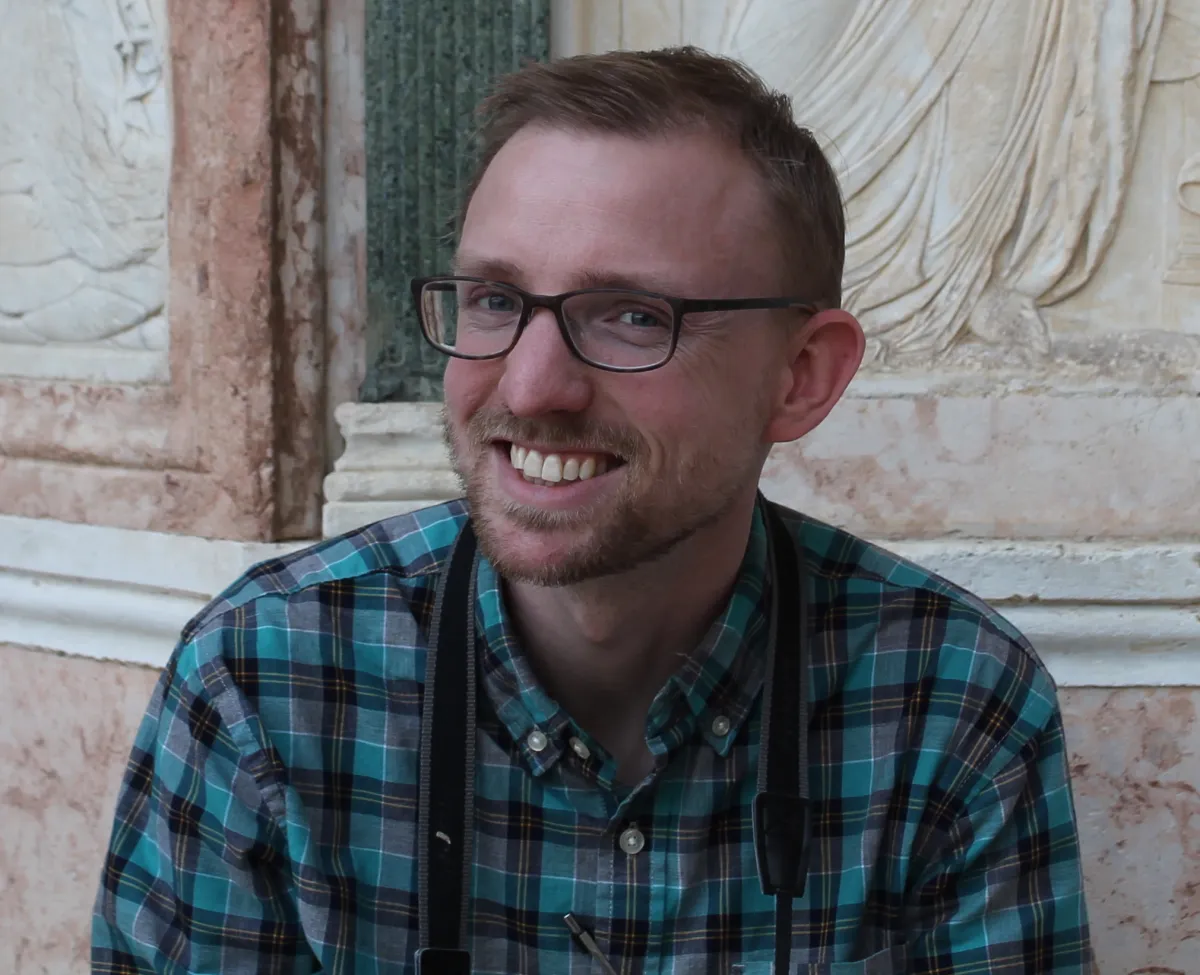
I write and teach about the history of science and astronomy. My research has appeared in Journal for the History of Astronomy, Historical Studies in the Natural Sciences, Mercury, Endeavour, and Annals of Science. My book latest book, Creatures of Reason: John Herschel and the Invention of Science (University of Pittsburgh Press, 2024) examines the career of the most important astronomer and natural philosopher of the nineteenth century. I am co-editor of the Cambridge Companion to John Herschel (2024) and have also written for Physics Today. I also write fiction, which has appeared in Asimov’s, Analog, Clarkesworld, Beneath Ceaseless Skies, Orson Scott Card’s Intergalactic Medicine Show, and elsewhere. My first collection of short stories, Trees & Other Wonders, is available on Amazon. I’m the author of a science fiction novel, First Fleet, published by Axiomatic Publishing.