
Nightmare Magazine January 2026
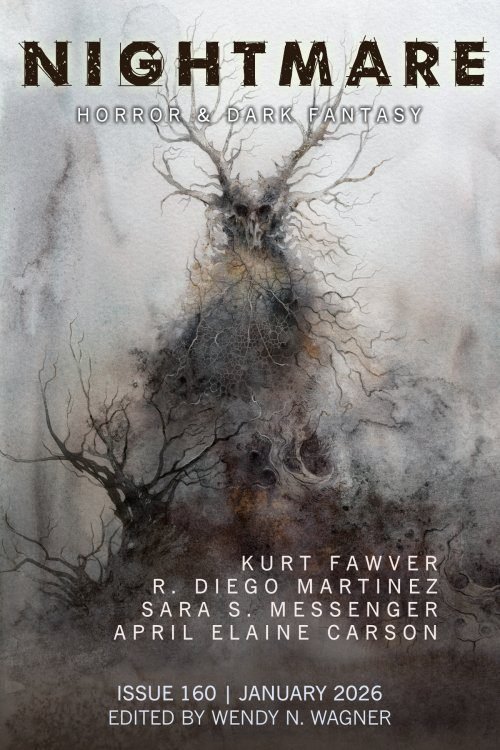
Barbara Barnett’s essay explores the uncanny darkness that lurks beneath the cheerful surface of Renaissance Faires, revealing how these festivals embody a unique form of folk horror wrapped in family-friendly entertainment. The piece opens with familiar faire imagery—jesters, music, foam swords, and turkey legs—before gradually shifting toward something more sinister.
The author describes how certain elements at the faire hint at darker undercurrents: a mysterious booth selling elixirs with names like Dragon’s Blood and warnings about poison, vendors offering spells and protective charms, and decorative skulls grinning from merchandise. This duality, Barnett argues, mirrors pre-Disneyfied fairy tales where sweetness conceals menace, like the candy house in Hansel and Gretel that hides a cannibalistic witch.
Barnett draws parallels between the faire’s atmosphere and the actual Renaissance period—a time when beauty and brutality coexisted, when artists like Leonardo da Vinci studied death while plague ravaged Europe, and when figures like Paracelsus experimented with poisons as medicines. The essay suggests that faire-goers are temporarily inhabiting a mindset where death was accepted as naturally as weather, something to acknowledge rather than deny.
Traditional folk ballads woven throughout the piece underscore this theme. The author references Child Ballads like “Prince Heathen” and “Tam Lin,” songs that disguise violence and violation within pleasant melodies. Fair crowds sway to these tunes without fully registering their disturbing content, much as they purchase protective charms and skull jewelry without contemplating mortality’s proximity.
As the essay progresses toward evening, the faire’s darker qualities intensify. Shadows lengthen, candlelight creates hollow-eyed faces, and the atmosphere thickens with something ancient—“iron, maybe. Or blood.” The mysterious elixir vendor reappears, unchanged and watching. Folk songs about death and graves drift through the dusk as the boundary between past and present seems to blur.
Barnett positions the Renaissance Faire as a controlled encounter with our fears—a place where patrons can “flirt with witchcraft” and purchase bottled anxieties before returning safely to modern life. Yet she suggests this boundary may be more porous than we believe. The essay concludes with an eerie image: a faire-goer discovering an unexplained vial labeled “Return” in their pocket, and later hearing phantom faire music on windless nights.
The central insight is that Renaissance Faires offer more than nostalgic entertainment—they provide what the author calls “the daylight haunted house,” where memento mori coexists with mead foam. The faire acknowledges what the Renaissance understood: death isn’t joy’s opposite but its echo. By combining pastoral beauty with hints of folk horror, the faire creates a space where visitors can safely acknowledge what waits beneath the skin, wrapped in velvet and irony, before the gate closes—though Barnett suggests it never quite closes completely.
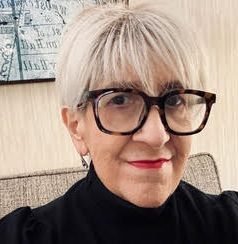
Barbara Barnett is the Bram Stoker Award-nominated author of The Apothecary’s Curse and its sequel, Alchemy of Glass. Her new book on the cultural magic of Renaissance Faires will be published by Rizzoli in 2027.
Emerita Publisher and Executive Editor of Blogcritics Magazine, Barbara covers pop culture and the arts. Based in Pittsburgh, she divides her time between music, writing, and wandering through places—real and imagined—where something strange and wonderful is always just beginning to stir. You can find her at BodiceAndDoublet.com and @BodiceDoublet on Twitter