
Kaleidotrope, January 2026
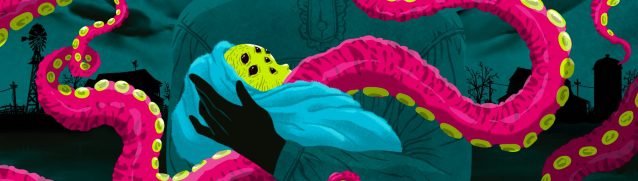
This haunting narrative follows a fraudulent spiritualist who, after being exposed as a charlatan, finds herself genuinely haunted by the dead she once pretended to contact.
The narrator, known as “the Little Seer” due to her small stature, grew up watching her mother deceive customers with tarot readings—a formative lesson in profitable deception. As an adult with restricted growth, she rejected a teaching position to become a medium during the Gilded Age, conducting elaborate séances where she convinced the bereaved she could communicate with their departed loved ones. Her signature trick involved regurgitating cheesecloth as “ectoplasm” and using hidden perfumes to conjure the scents of the deceased.
Her successful career ended abruptly when she claimed to contact a man’s dead son—only to discover the son was alive. The scandal destroyed her reputation, and she fled to the Florida Keys with her fraudulent props, hoping to escape both public shame and the ghosts she’d wronged.
In her pastel gingerbread house in the Keys, she attempts a quiet life, patronized by neighbors who treat her like a helpless child due to her size. But the dead she deceived begin appearing—actual ghosts, not theatrical illusions. First comes a Gibson Girl who angrily reveals what she would have truly told her husband (explicit marital advice, not the platitudes the narrator had invented). More spirits follow, appearing at all hours, filling her home with their unfinished business.
Among these visitors is a young Spanish conquistador who becomes a recurring presence, appearing weekly at sunset. Unlike the others, he seems unaware of his own death, stuck in temporal suspension. During one of his visits, when the narrator confesses her fraudulent past and despairs over her ghostly visitors, he suggests through gestures that she write down their messages.
This becomes her redemption. For a year, she serves as secretary to the dead, recording their true messages to the living—confessions, apologies, hidden inheritances, family recipes, declarations of love. She learns from a deceased butcher that those who died by murder or suicide go elsewhere to recover before moving on.
Once all the spirits have delivered their messages, she compiles these testimonies and mails them anonymously to the newspaper that exposed her, providing proof of genuine supernatural contact and completing her penance. The story concludes on her birthday, as she waits for the conquistador with rum and her carefully folded ectoplasm, ready to gift away the symbol of her fraudulent past. She has moved from performing fake supernatural communication to genuine mediumship, finding unexpected purpose in giving voice to those she once exploited.
The narrative weaves themes of deception and authenticity, isolation and connection, examining how society treats those who are different while exploring the narrator’s journey from cynical fraud to reluctant but genuine medium, ultimately finding redemption through honest service to the dead.