
Augur Literary Society, January 2026
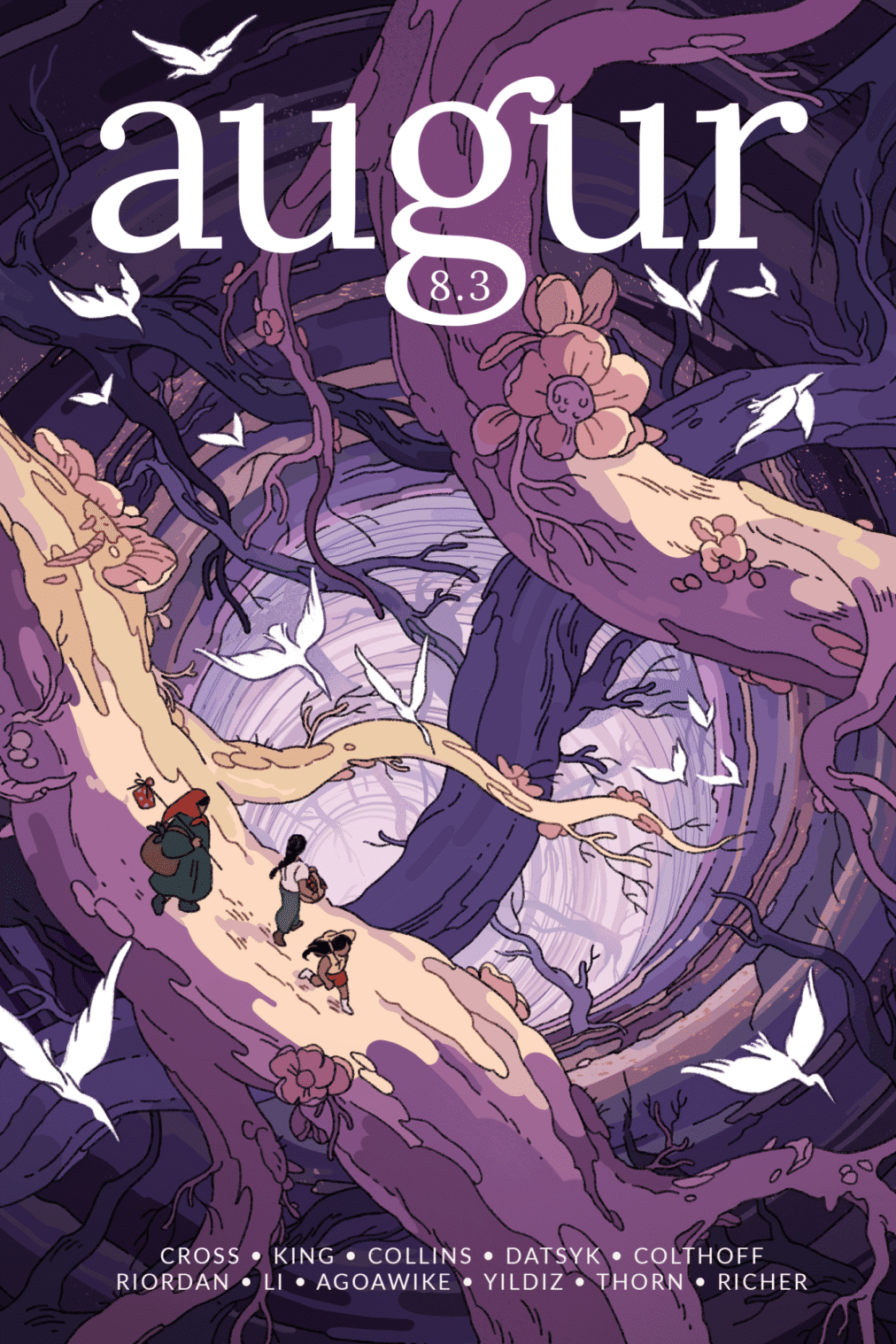
This unsettling epistolary horror story unfolds through a series of recovered dark web messages, framed as evidence submitted to a district attorney investigating a missing persons case in Bennington, Vermont.
The story centers on Dr. Rolfe Morton, a middle-aged classics professor with a wandering eye and a troubled marriage, who discovers a mysterious dark web forum called OVID — a community devoted to what its members call “metamorphosis.” Rolfe, operating under the username DoctorPotamoi, is drawn into flirtatious correspondence with a user called spinningjenny, who presents herself as a seductive young woman offering him a radical transformation of body and spirit.
Their exchanges begin as seemingly playful online flirtation, with Rolfe eager to escape what he describes as his suffocating bourgeois life — a loveless marriage, academic drudgery, and quiet desperation. But spinningjenny’s messages carry an undercurrent of something stranger and darker. She speaks of “irreversible metamorphoses” and warns that her community’s practices cannot be undone. When Rolfe confesses to recurring dreams in which he slides blades of grass into his own veins and experiences an ecstatic fusion with the natural world, she recognizes him as a prime candidate for initiation.
A previous OVID initiate named Spencer had died near Glastenbury Mountain under bizarre circumstances — his arteries clogged with grass, his body marked with an unnatural green scar — but spinningjenny reassures Rolfe this resulted from impatience and disobedience, not the practice itself. Rolfe, intoxicated by desire and a lifelong longing he cannot fully name, agrees to meet her in a forest clearing.
After one false start, Rolfe disappears into the woods on the night of June 8th. His wife, Cynthia Ross — a lawyer who had initially suspected ordinary infidelity — traces his online activity to OVID and confronts the webmaster directly. She receives a cryptic, chilling reply from “Arachne Aickman,” the woman behind the spinningjenny persona, who suggests that Rolfe received a kind of cosmic justice and underwent a “transformation” in the moonlit woods.
A newspaper article from the Bennington Beagle confirms the horror: Morton’s body is discovered in a cluster of oak trees, his skin turned green, his hair resembling moss, his organs infiltrated by plant growth. Grass had grown through his heart’s ventricles; roots were found in his liver and kidneys; his bloodstream was saturated with chlorophyll. Cynthia herself subsequently disappears after texting her sister that she believed she knew where Rolfe was.
The story closes with a darkly ironic twist: the district attorney assigned to investigate, Aleister Blake, sends his own message to spinningjenny — describing vivid erotic dreams about weeping willows and requesting a meeting over a glass of wine. The cycle, the story implies, is beginning again.
“Chlorophilia” is a sharp, formally inventive piece of ecological body horror that uses internet-age vernacular and epistolary distance to explore themes of desire, hubris, and humanity’s uncomfortable relationship with the natural world.
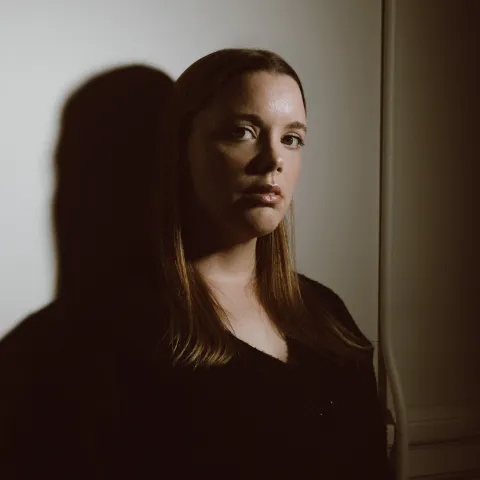
Miriam Richer was born in California and has spent most of her life in Eastern Canada. Her writing has appeared or is forthcoming in The Ex-Puritan, carte blanche, Plenitude, Boulevard, Shirley Jackson Studies, Augur, OVER/EXPOSED, Qwerty, and elsewhere. She is a co-host of Craftwork: a podcast by writers for
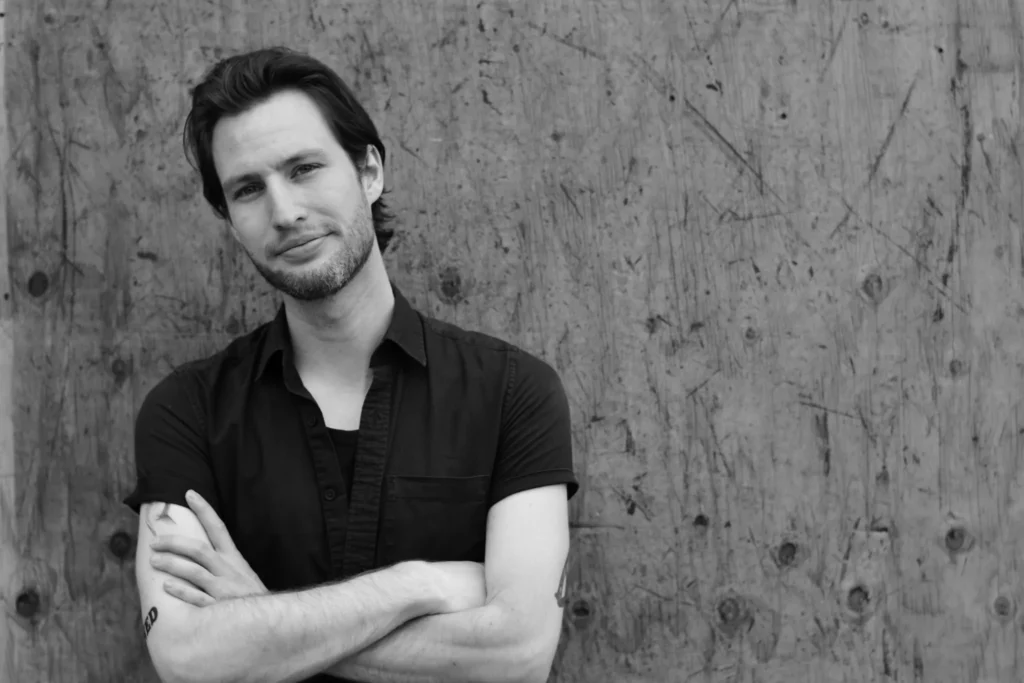
Mike Thorn is a fiction writer and horror scholar. He is the author of Shelter for the Damned, Darkest Hours, and Peel Back and See. His stories have appeared in anthologies, magazines, and podcasts, including Augur, Vastarien, NoSleep, and Tales to Terrify. His essays and articles have been published in American Gothic Studies, The Weird: A Companion, American Twilight: The Cinema of Tobe Hooper, Thinking Horror: A Journal of Philosophy, and elsewhere.
He co-hosts the writing-themed Craftwork podcast with Miriam Richer, and he is an Associate Editor of the peer-reviewed, open-access academic journal, Monstrum. He holds his PhD in English from the University of New Brunswick.