
Haven Spec Magazine, January 2026
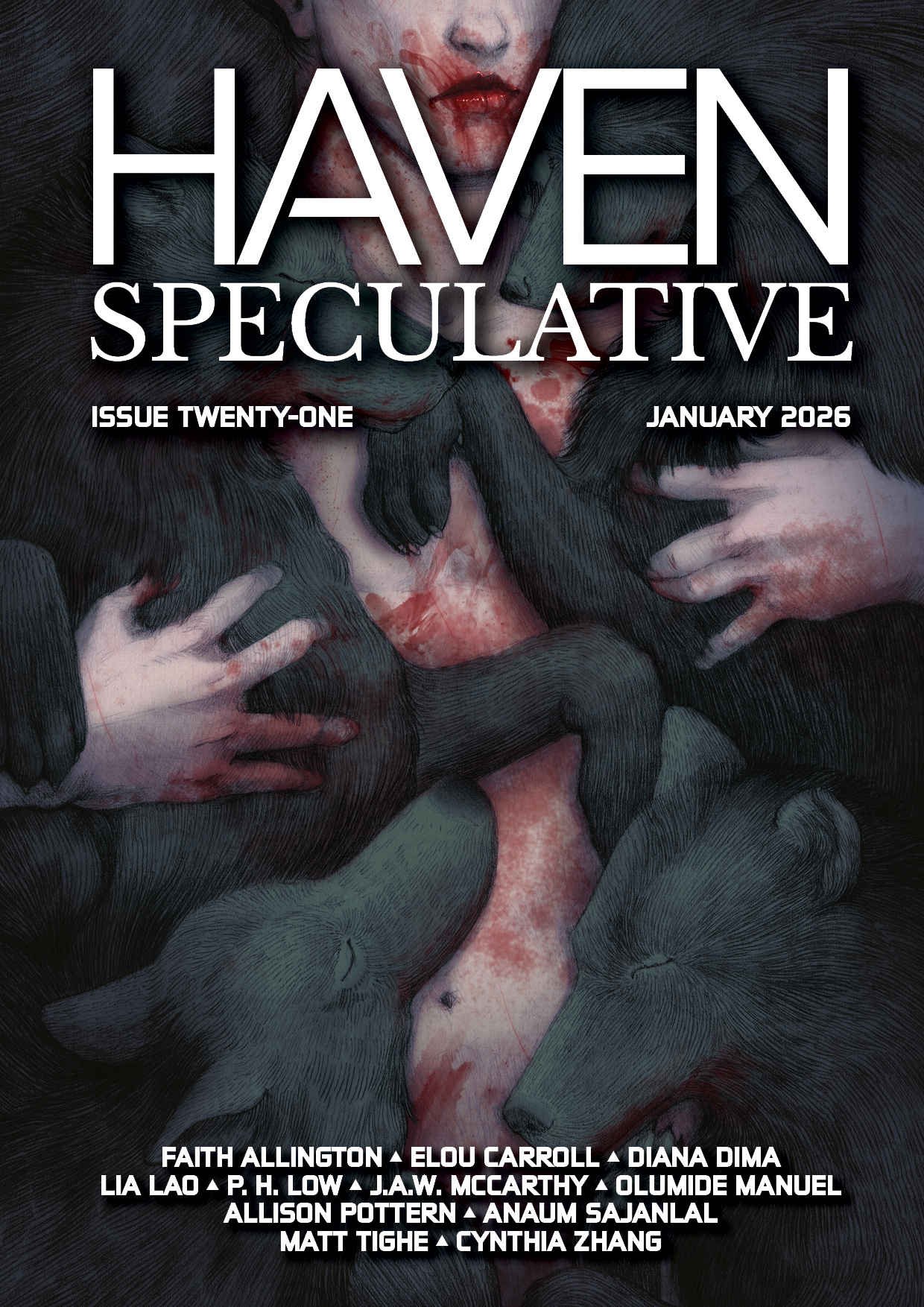
In this quiet, unsettling piece of speculative fiction, Elou Carroll builds a world where every person is accompanied by a “wickend” — a shadow-self pulled from the mirror, made to bear all the emotions deemed unacceptable for “true people” to feel or express. Anger, grief, wildness, desire: none of these belong to you. They belong to it.
The story follows Caris from early childhood to young adulthood, tracing her complicated relationship with her own wickend, whom she secretly names Sarah — Caris backwards, nearly. From the age of four, Caris is taught the foundational rule of her society: look away. If wickedness rises in you, avert your eyes and let your shadow carry it. The wickend will simply know. The wickend will simply suffer.
Carroll reveals the cruelty embedded in this arrangement with a light but precise touch. When wickends misbehave, other wickends punish them — true people need not dirty their hands with discipline either. At school, questions about wickends are deflected as “home questions.” At home, they’re shut down entirely. The system sustains itself through enforced silence and practiced avoidance, and everyone, even the adults, seems to be quietly suffering for it.
What makes the story tender is Caris’s refusal to fully comply. In secret, in the dark, she pulls Sarah through the mirror and holds her. She catalogs Sarah’s wounds — earned absorbing Caris’s punishments and emotions — and marks her own skin to match them in solidarity. She names her, talks to her, loves her, even as the world insists Sarah is not a she but an it, not a friend but a function.
The ginger-haired boy threads through the narrative as a recurring figure — first as a child whose wickend yanks Caris’s plaits, then as a young man she’s drawn to despite Sarah’s warnings. By the time Caris is twenty-two, she’s trapped in a cold, suffocating domestic arrangement with him. He leaves a ring box on the table for twenty-four days without a word. He strikes Sarah — not through his wickend, but with his own hands — while his wickend only watches. The horror here is quiet and recognizable: a man who has outsourced his cruelty so thoroughly that when it finally erupts, no shadow takes the blame.
The story ends on a moment of reclamation. Sarah mouths the familiar phrase — and if you must be wicked — and this time, instead of looking away, Caris meets her eyes and completes it: you must. It’s a small revolution, but Carroll earns it fully. To claim your wickedness — your grief, your anger, your refusal — is to finally become whole.
Elegantly constructed and emotionally precise, this is a story about the violence of emotional suppression, the intimacy of one’s own shadow, and the radical act of looking at yourself and refusing to turn away.
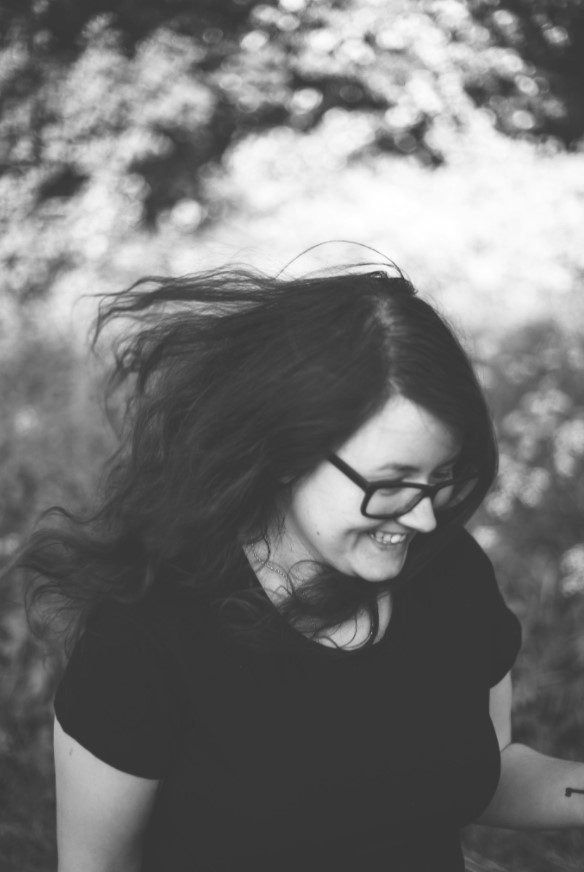
Her work has been published or is forthcoming in The Deadlands, Baffling Magazine, If There’s Anyone Left (Volume 3), In Somnio: A Collection of Modern Gothic Horror (Tenebrous Press), Spirit Machine (Air and Nothingness Press), Ghostlore (Alternative Stories Podcast) and others. Her short story “The Great Green Forever” was shortlisted for the 2020 HG Wells Short Story Competition (Grand Senior Prize). In 2021, her short story “A Gift, a Witch and a Wakening of Honey” was nominated for the Pushcart Prize. In 2022, “Become a Flute, Become a Spyglass, Become a Knife” made the top 10 in the Ladies of Horror Fiction Readers’ Choice Awards. Her short story “You Row and You Burn” was included in the 2023 Nebula Recommended Reading List.