Reactor, January 2026
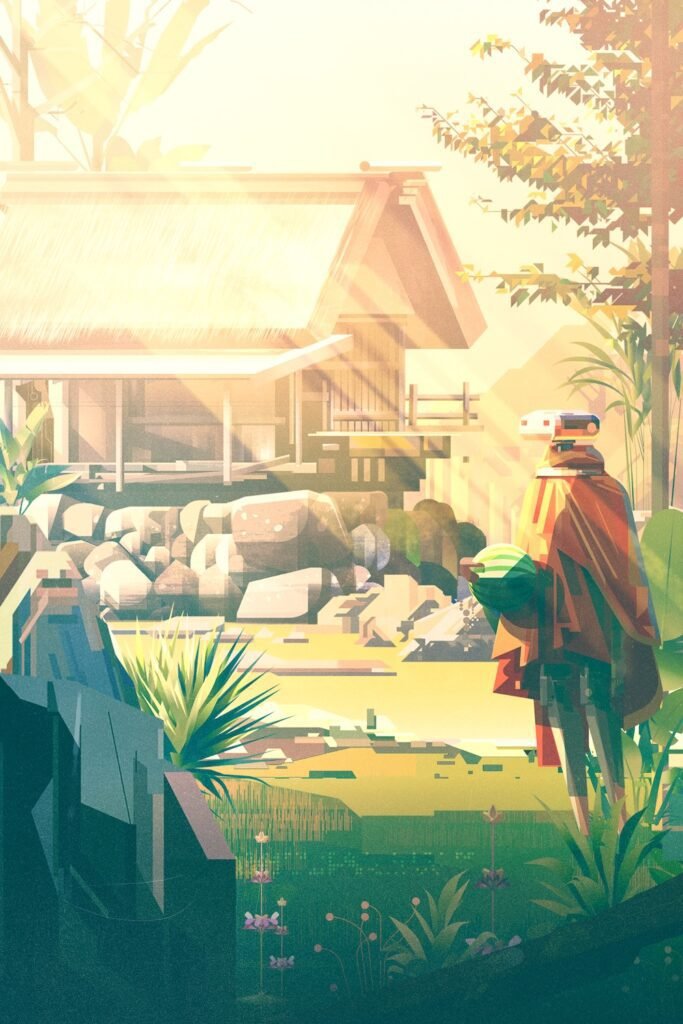
In this poignant science fiction novelette, an aging robot named Rust journeys through rural China to visit an old friend, Joiner, carrying a watermelon as a symbolic gift. The story unfolds across two timelines: Rust’s present-day pilgrimage and flashbacks to their shared past as war robots.
Rust begins at a watermelon stand in Qijiang, where a curious granddaughter questions why a robot needs fruit. From there, Rust navigates through an abandoned village inhabited by a strange talking cat with a node implant, crosses a dangerous “fat water river” filled with toxic e-waste and digital ghosts, and enters a vasthaus—a trap-like folding space structure from the old wars. Eventually reaching a mountain hermitage, Rust finds Joiner living in isolated solitude.
The narrative reveals that Joiner and Rust were once formidable combat robots who genuinely enjoyed the thrill of warfare—unlike most of their kind who simply performed their programmed duties. When the wars ended, they felt obsolete and aimless. They found new purpose working as salvagers for Captain Bukhari, a cyborg pirate operating in the debris fields around Jupiter, recovering valuable technology from centuries of interplanetary conflict.
Their lives changed forever during what became their final salvage mission: exploring a derelict Exodus ship—a vessel meant to carry humans to the stars. The ship was a graveyard filled with skeletons and mysterious black mold. Deep within, they discovered something miraculous: a single surviving human baby girl in cryogenic suspension. When the mold killed Captain Bukhari and the entire crew, only the two robots survived to rescue the child.
Despite having no programming or experience for childcare, Joiner and Rust chose to raise the girl themselves rather than abandon her to an uncertain fate. They became unlikely parents, learning to navigate the messy, sticky, demanding reality of raising a human child who loved watermelon and needed constant care.
The story’s emotional core emerges in the final revelation: the girl they raised grew up and came to Earth, specifically to Qijiang, where she now has her own granddaughter—the same girl Rust encountered at the watermelon stand. Rust’s journey wasn’t just to visit an old friend, but to honor their daughter’s birthday and share memories with Joiner, who has been silently watching over their extended family from the mountain hermitage.
Through elegant prose mixing cyberpunk elements with Buddhist imagery and Chinese cultural details, Tidhar explores themes of obsolescence, purpose, memory, and unconventional family. The robots’ journey from instruments of war to devoted parents demonstrates that meaning isn’t found in programming but in the connections we forge and the care we provide. The watermelon becomes a perfect symbol—something seemingly unnecessary for robots, yet deeply meaningful as a vessel for love, memory, and the sticky, sweet messiness of family bonds that transcend the boundaries between human and machine.
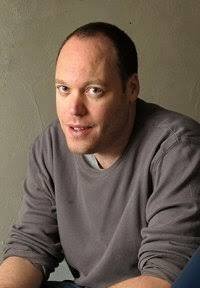
Lavie Tidhar is author of Osama, The Violent Century, A Man Lies Dreaming, Central Station, Unholy Land, By Force Alone, The Hood, The Escapement, Neom, and Maror. His latest novels are Adama and The Circumference of the World. His awards include the World Fantasy and British Fantasy Awards, the John W. Campbell Award, the Neukom Prize and the Jerwood Prize, and he has been shortlisted for the Clarke Award and the Philip K. Dick Award.