
Kaleidotrope, January 2026
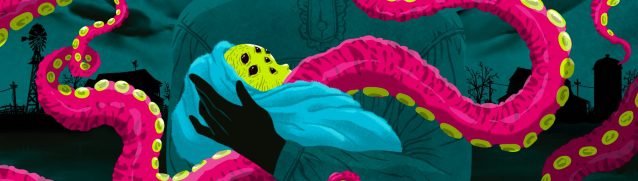
EC Dorgan’s unsettling short story follows an unnamed narrator who has recently escaped city life to start over in the rural prairie. What begins as a fresh start in the country—complete with morning meditation, mobility exercises, and the wide-open sky—gradually transforms into something far stranger and more sinister.
The narrator’s initial struggles are mundane: learning to manage a well water system, dealing with salt bridges in an ancient water softener, and installing filtration systems to handle iron and manganese. These practical concerns mirror a deeper anxiety that manifests in the narrator’s obsession with Everest documentaries, particularly footage of climbers facing sheer drops and fatal crevasses. The narrator experiences vertigo watching these shows and suffers nightmares about being trapped on mountains.
As the story progresses, reality begins to blur. The narrator becomes fixated on the well itself—the deep hole just feet from the bedroom—and starts practicing dowsing with a willow branch and later a pendulum. A crack in the basement floor near where the well connects to the water system becomes increasingly significant, growing wider over time and emitting a cold rush of air.
The narrator begins dating Jess, a confident “well person” who helps demystify water softeners and becomes a romantic partner. But when the narrator sneaks into Jess’s basement, they discover something bizarre: hockey jerseys carefully framed around her water softener in an unfinished room, and a crack in the floor five times wider than their own, with a breeze coming through it.
The story takes its darkest turn when the narrator visits Jess’s sister for Thanksgiving. In her basement, the water softener is decorated with homemade knitting and LED lights, and the crack in her floor is so wide the narrator can see night sky and bats flying through it. This revelation suggests a community-wide secret among “water softener people”—those with wells rather than cisterns.
The narrator’s own crack becomes a crevasse, and they begin physically descending into it at night, climbing down through aspen trees that shouldn’t exist beneath a basement floor. The story concludes with the narrator fully initiated into this mysterious practice. They wake each morning beside their well, having spent the night descending through the crevasse with Jess, drinking wine among their decorated water softeners, climbing down into an impossible underground realm where “the world-eating sky opens wide.”
Dorgan crafts a masterful piece of rural weird fiction that uses the mundane infrastructure of country living—wells, water softeners, brine tanks—as portals to something otherworldly. The story explores themes of isolation, community belonging, and the price of escape, suggesting that the narrator’s flight from urban suffocation has led to a different kind of transformation entirely. The “water softener people” have found their own form of transcendence, one that literally and metaphorically goes deeper than surface existence.
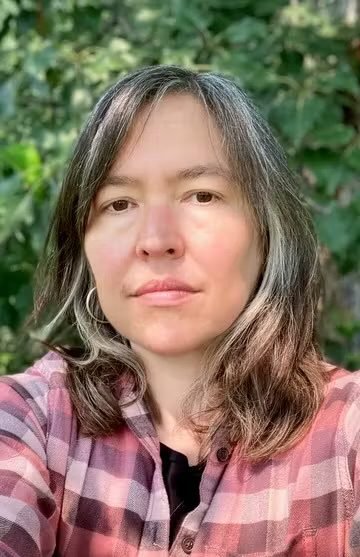
EC Dorgan writes weird fiction and horror stories on Treaty 6 territory near Edmonton, Canada. Her short fiction appears in publications such as The Dark, Augur, and Cosmic Horror Monthly. In 2025, she received the Alberta Literary Award for Short Story.