
Clarkesworld, May 2026
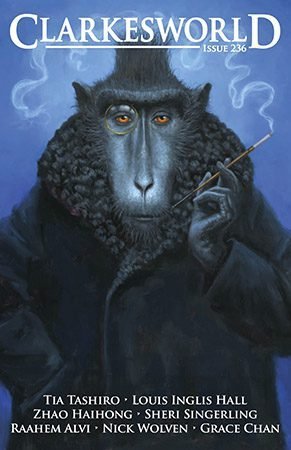
Teresa is a Canadian archaeologist working the interior caves of northern Brazil, returning from maternity leave with her infant son Daniel strapped to her chest. At an uninhabited cave site in Monte Alegre State Park, her colleague calls her over to something impossible: six words scrawled in what looks like permanent marker on a wall that has seen no human presence in centuries. You were right. I miss you. When Teresa radiocarbon dates the pigments, the results confirm what she already fears. The messages are ancient. She buries the discovery in a footnote and says nothing — except to think, fleetingly, of Iara.
Iara Cambaúva is the world’s foremost advocate for time travel technology. She is brilliant, famous, and Teresa’s ex-wife. Their marriage, which lasted nearly a decade, collapsed under the familiar pressures of two driven people who prioritized their work and assumed the rest would sort itself out. Teresa’s archaeology, Iara’s temporal physics: parallel obsessions that could have been a shared life and weren’t. The divorce was finalized in calm, devastating words by the Atlantic Ocean. Teresa’s parting shot — you’ll regret leaving me — echoes across the story as a wound she never quite closes.
In the years that follow, Teresa raises Daniel alone, navigating fieldwork and daycare and the accumulated ordinary miracles of parenthood: his scheming against an eye patch, his crooked smile, the warmth of him sleeping against her side after nightmares. She survives it, and she savors it. Meanwhile, Iara’s work inches closer to reality. The messages keep coming — at new sites, written two thousand years ago, never naming her but unmistakably hers. I love you. I miss you. I’m forgetting your face. I want to come home. Teresa cannot publish. She cannot speak. She carries the knowledge alone, a closed loop she can neither enter nor escape.
The story’s darkest revelation arrives when colleague Joseph Osondu uncovers a skeleton bearing the unmistakable signs of modern dental work: artificial enamel crowns on two front teeth. Crowns identical to the ones Daniel received as a boy, after a playground fall. Teresa has been reading the wrong name into the messages all along. It is not Iara who traveled back and became stranded in the deep past. It is Daniel. Every site where she found a message is one to which she brought her son. He knew where she worked because he had been there with her. The time capsule she gave him on a chain, the strange visit to that unremarkable cave, the urgency she tried to make memorable without explanation — all of it was her trying to reach backward, to leave him a handhold across two thousand years.
The story closes with Teresa and Iara driving together toward the site, metal detectors in hand, searching for whatever Daniel managed to record and bury before the centuries took him. The image the story ends on is luminous and sorrowful: Teresa walking through the dark Brazilian forest, the detector chiming its half-melody, Iara somewhere behind her, her son somewhere impossibly far ahead.
Tashiro structures the story around a single, elegant irony — that the archaeological evidence Teresa has been reading as proof of Iara’s future is actually proof of Daniel’s. The Kauaʻi ʻōʻō motif, the extinct Hawaiian bird whose last surviving male called and called with no answering song, gives the story its emotional key. Teresa’s grief is the grief of the unanswered call: lover, son, collaborator, the family she imagined and the one she actually built. The prose is warm and controlled, the speculative mechanics handled with real rigor, and the emotional architecture is faultless.
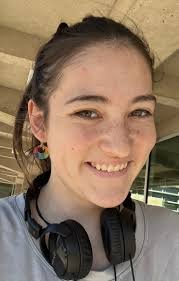
Tia Tashiro is a speculative fiction author and a scientist. She was a finalist for the 2025 Astounding Award for Best New Writer, is a 2026 Hugo finalist in the short story category, and is a 2026 Derringer Award winner. Her short fiction has been published in Clarkesworld, Uncanny, and Apex. She’s also one of the rotating Editors in Chief of Wyrmhole Magazine.