
Lightspeed, February 2026
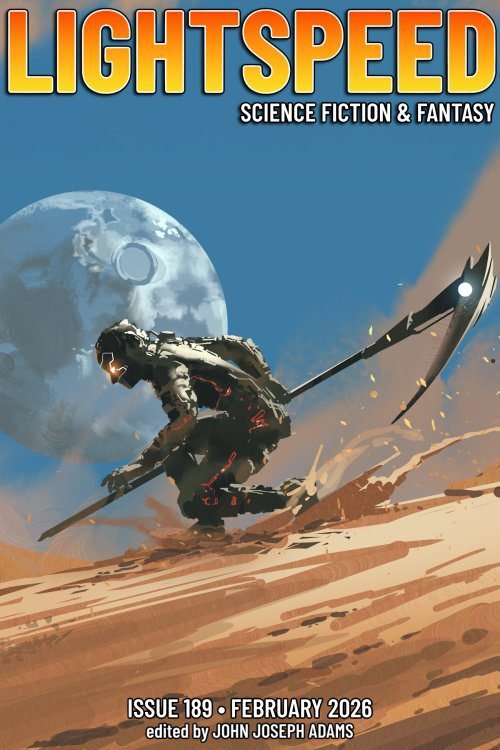
“Six Sides of a Fairy Tale” is a second-person fantasy story told from six distinct perspectives, each labeled like the facets of a geometric shape. The central narrator is Yue, a royal prophet who has been close friends with the Crown Princess Jieqiong since childhood. The story unfolds in the wake of Jieqiong’s mysterious disappearance, and each section reframes the same event through a different lens — revealing, piece by piece, that Yue knows far more than she lets on.
In the first section, the king summons Yue to the throne room three days after Jieqiong vanishes. Though Yue insists her prophetic gift deals in futures rather than pasts, the king asks her to scry for what may come. Yue agrees, noting privately that a prophecy can function like a story — if told convincingly enough, it becomes its own kind of truth. This framing sets up the story’s central tension between truth-telling and deliberate deception.
The second section follows the royal guards as they compare notes and conclude that no one passed through the palace’s main entrance or left Jieqiong’s chambers. The possibility arises that Jieqiong may have left voluntarily — a horse is missing from the stables — but no one wants to voice it to the grieving king. Yue watches and says nothing, protecting her secret.
The third section reveals the catalyst for Jieqiong’s departure: a mageknight who accompanied a visiting prince caught Jieqiong’s eye at a welcome feast. He was gifted with magic and spoke of travels beyond the palace walls. Jieqiong, whose life had always been confined by borders and courtly expectations, was captivated. Yue observes with a bittersweet mix of jealousy and understanding, recognizing that Jieqiong had found something — or someone — who made her want more.
The fourth and most emotionally charged section reveals what actually happened the night Jieqiong disappeared. She woke Yue in the dark and asked for her help, begging her not to reveal her destination to the king. Jieqiong confessed she was leaving to see the world, tired of constantly asking permission and watching the walls of her life close in around her. Despite fear and heartbreak, Yue agreed to help, using her scrying mirror — without her full complement of herbs — to chart Jieqiong a safer route through the woods before sunrise.
The fifth section returns to the present, where Yue prepares to perform the official scrying before the king and his court. She deliberately breaks the circle of amplifying herbs with her foot, sabotaging the ritual so she cannot see — and cannot be compelled to reveal — Jieqiong’s true fate.
The sixth and final section is the “truth” Yue tells the king: a fairy-tale reassurance that the princess found love brave enough to act on, and that she is happy. Whether this is prophecy, lie, or hopeful story, Yue offers it as a gift — to the king, to herself, and perhaps to Jieqiong, wherever she has gone.
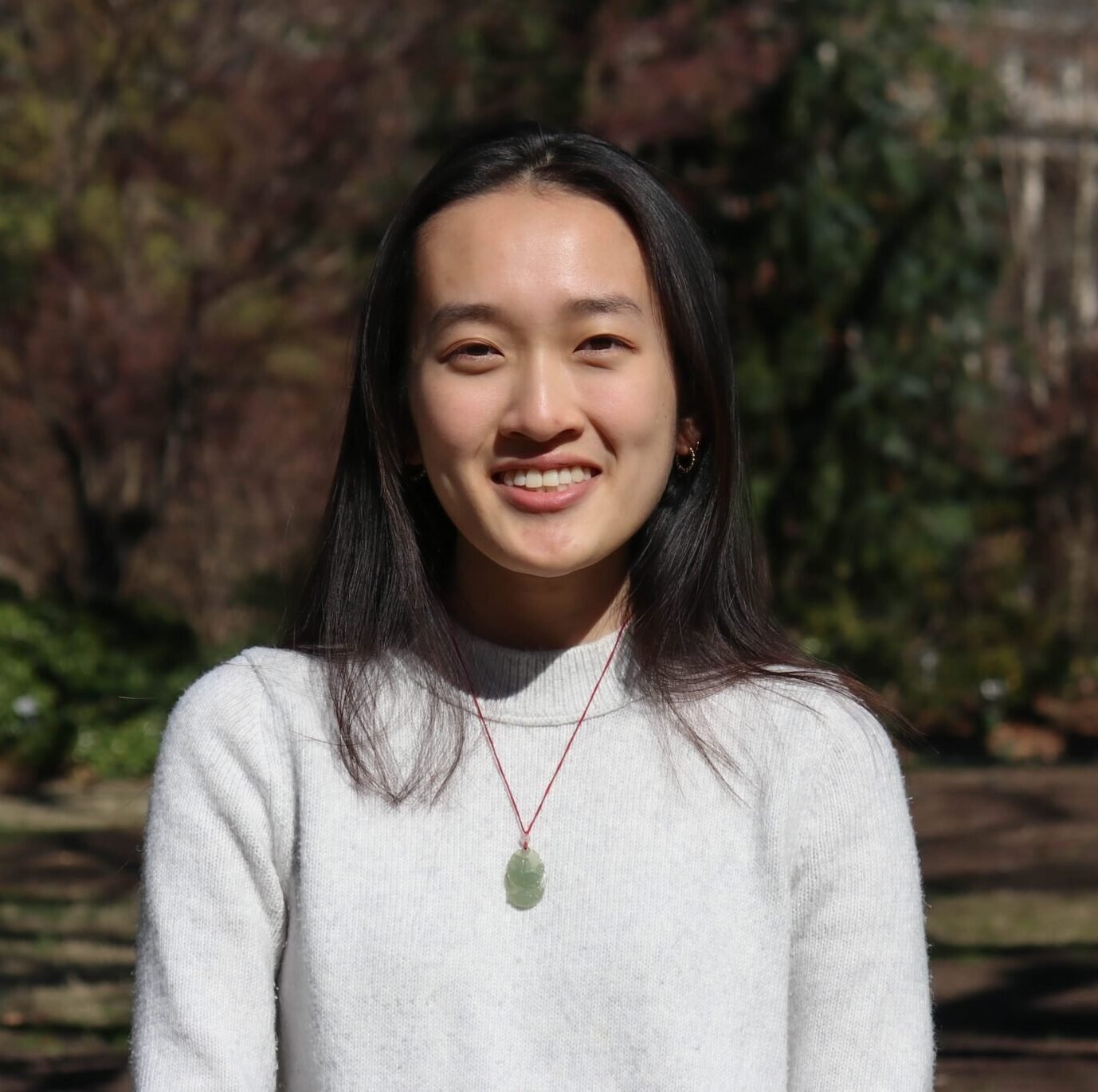
Audrey Zhou is a Chinese American writer from North Carolina. Her short fiction is published/forthcoming in Strange Horizons, PseudoPod, and Lightspeed, among others. She is a 2025 graduate of the Clarion workshop, which she will spend the rest of her summers missing.
When not writing, she can be found taking long walks and curating oddly specific playlists of music. Find her @aud_zhouon Twitter and @audreyzhou.bsky.social on Bluesky.