
Strange Horizons, February 2026
This folk horror short story is narrated by Cass, a young Indigenous and Chicana woman from a small, ancient desert valley community in northern New Mexico. She opens with two confessions: she cannot swim, and she deeply loved her cousin Isabella.
Cass and Isabella grew up inseparable — neighbors, classmates, altar girls, and best friends despite being cousins. The centerpiece of their childhood was a shallow river near their grandmother’s house, particularly its deepest point called “the heart,” where a mysterious, seemingly bottomless hole existed beneath a small waterfall. The two cousins would dare each other to dive into this hole, though Cass always cheated, faking depth since she couldn’t actually swim.
Their grandmother, a wise elder who spoke little English, warned them repeatedly about the hole. She told stories of an ancient, hungry spirit beneath the river — a water beast that fed on the young, the unborn, and menstruating girls, whose hunger had been stirred long ago when Coyote stole its offspring. She described how her own mother had fallen into the hole while pregnant, losing the baby the very next day. Cass’s mother dismissed this as a misremembered miscarriage, but Cass would come to believe otherwise.
Years later, after the pandemic kept them apart and both had moved away for school, Cass and Isabella return home to find the river devastatingly shallow from years of drought. On a nostalgic afternoon, Isabella suggests they play their old game at the hole one last time. She dives in — and doesn’t come back up. After agonizing minutes, Cass reaches into the freezing abyss and feels something grab her ankle. She pulls Isabella out, but her cousin emerges changed: pale, catatonic, and with the flesh of her feet gnawed to the bone. Isabella dies five days later from organ failure, having developed a violent, consuming hydrophobia — an aversion to water so severe she tried to tear the blood from her own veins.
Unable to accept the official explanation of a brain-eating amoeba, Cass researches local records and uncovers a grim pattern: children and young women disappearing into the river for centuries, always followed by floods. The river then begins calling her name in a whispered, otherworldly tongue.
Grief-stricken and reckless, Cass steps into the hole herself. She is dragged deep into the earth, where she feels the presence of the ancient Thing — older than the village, older than the mountains — and understands its bargain: feed it young blood, and it will sustain the land and its people. The Thing spits her out, deeming her too old. She loses both feet to amputation but survives, and the valley blooms with rain afterward.
The story ends on a chilling note. A new family with many young children has moved in nearby, and Cass — corrupted by the Thing’s influence and desperate to save her dying community — considers leading the children to the hole. She rationalizes it as necessity, even devotion, while acknowledging she has become something monstrous. The final lines are a haunted, unresolved apology to Isabella.
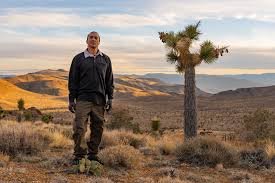
Ocoxōchitl la Coyota is an Indigenous and Chicana writer from northern New Mexico. Her work explores folk horror and speculative narratives shaped by Southwestern landscapes, inherited memory, and borderlands history. She can be found at lacoyotawrites.wordpress.com. (she/her/hers)