
Asimov’s Science Fiction, March/April 2026
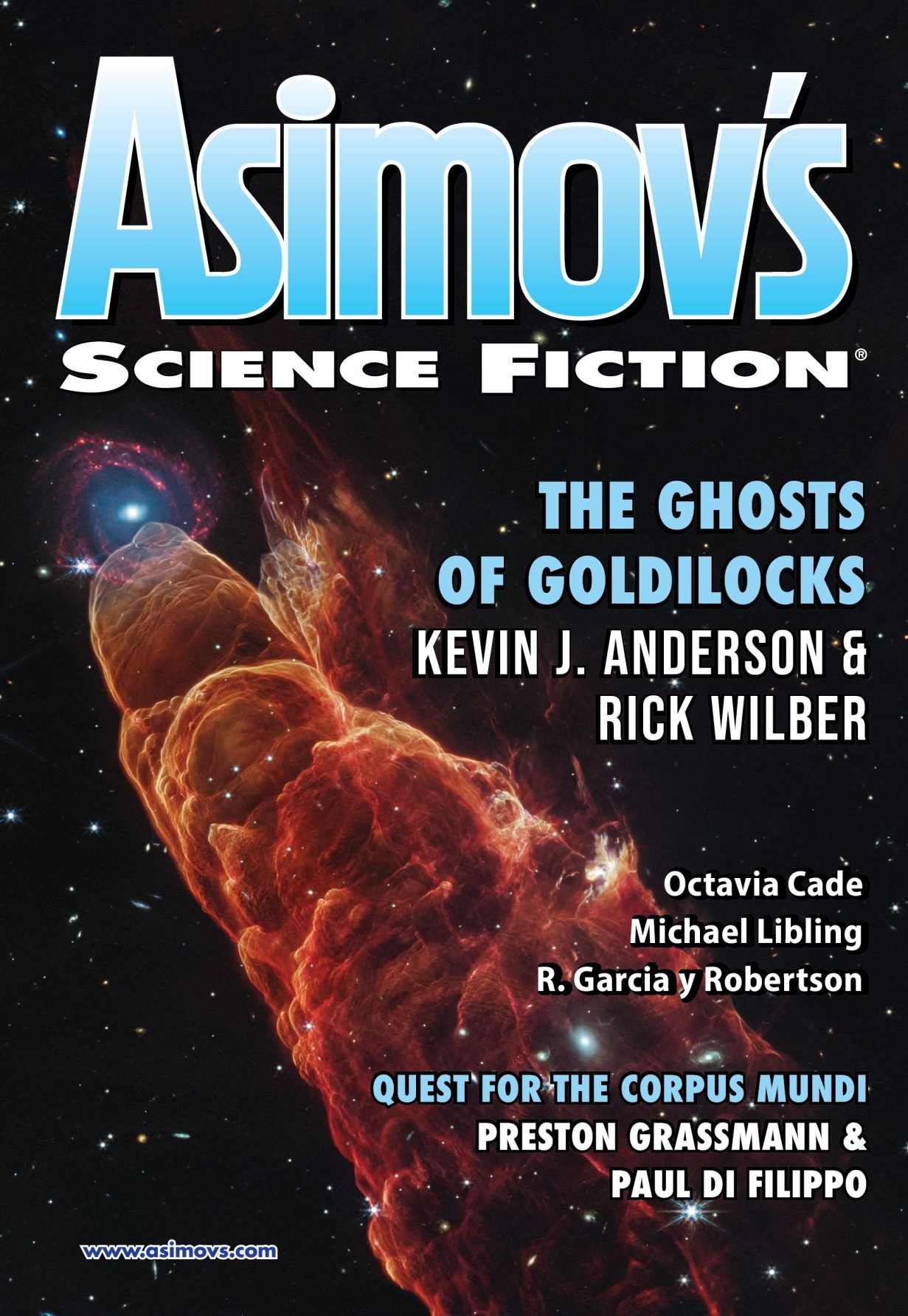
Sharon (Shar) Katz is a chronic second-guesser who always wonders how her life might have turned out differently. When Virtual Alternative Reality (VAR) technology becomes commercially available, allowing people to experience ten minutes of an alternate life based on a different decision, she eagerly books an appointment despite her partner Ben’s concerns.
VAR works by reading users’ memories and using AI algorithms to construct plausible alternative timelines. Users choose a “turning point”—a specific decision or event—and experience what their life would be like if things had gone differently. Shar’s friends have already tried it: Allie experienced a life where her parents didn’t divorce (and ironically ended up divorced herself in that timeline), while others explored different career paths and relationships.
Ben worries that Shar’s desire to try VAR indicates regret about their life together, but she insists it’s pure curiosity. She hasn’t told him which turning point she chose because she knows it will upset him: she wants to experience the life where she didn’t follow him to New Jersey ten years ago.
At the Turning Points facility, Shar is strapped into a reclining chair with a sensory-deprivation helmet. But when the VAR session begins, something unexpected happens. In her alternate reality, she discovers that alternate-Shar is also at a VAR facility—in Boston instead of Trenton—about to experience her own alternative life where she tried martial arts as a child.
This triggers a cascading effect. Each alternate version of Sharon is also exploring their own “what if,” creating a rapid-fire sequence through dozens of alternative lives: one where she studied sociology, one where she didn’t marry Ben, one where her parents divorced, one where she had a dog, and on and on. The experience becomes a blur of static as Shar realizes a profound truth: in every possible life, no matter what choices she made, she would still be the type of person who second-guesses everything and wonders “how else” things might have gone.
Finally, the cascade stops at a reality where she continued with guitar lessons in her twenties—but more significantly, where her father never got cancer and is still alive. She finds herself in an Ohio house she shares with Ben, holding a photograph of her aged father and a Canadian coin he gave her. With only one minute remaining in the session, she realizes she should call him but freezes with the recognition that even in this life, she’s destined to visit a VAR facility eventually. Her nature doesn’t change.
When Shar returns to her original reality, Ben has left for a walk. She stands outside Turning Points crying, overwhelmed by the accumulated memories of dozens of alternative lives. The story ends with her trying to process what she’s learned: that her tendency to wonder “how else” things might have been is fundamental to who she is, across all possible realities. The experience has given her no clear answers, only more complexity—fitting for someone who never leaves anything unturned.
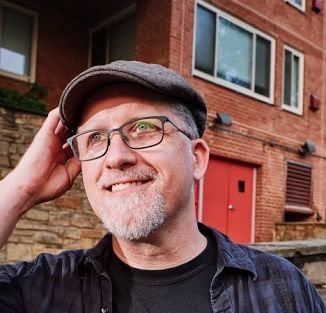
David Harris Ebenbach is a U.S. writer of fiction and poetry, a teacher, and an editor. He is the author of nine books, and he is the recipient of the Drue Heinz Literature Prize, the Juniper Prize and the Patricia Bibby Award. Ebenbach’s first science fiction novel, How to Mars, was published in 2021.